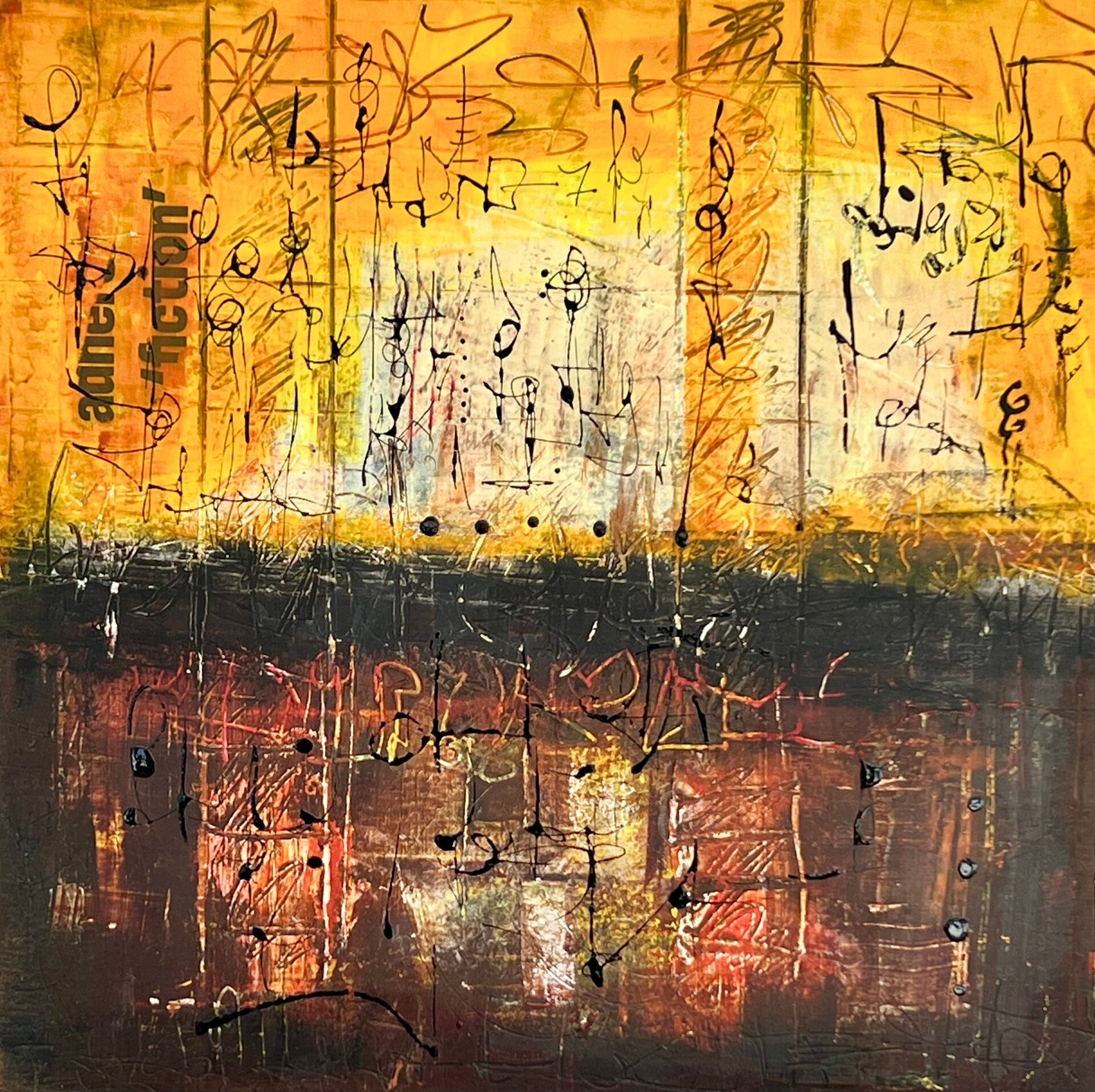
I have been researching how to add black marks, asemic writing, symbols etc over oil paint and coldwax. The following is what I have discovered so far, I have tested upto a point but need to let everything cure and dry out before I continue with the final finish.
Adding handwritten text to an oil and cold wax painting can introduce narrative, rhythm, and a personal touch that contrasts with the rich, tactile surface of the wax. One material that could work for this purpose is Winsor & Newton Black Indian Ink, valued for its deep, opaque black and fluid handling qualities.Before applying ink, the oil and cold wax painting should be fully cured. While the surface may feel dry after a few weeks, allowing several months for curing is preferable, particularly for thicker passages of paint. A cured surface reduces the risk of adhesion problems and helps prevent future cracking.
Because cold wax produces a slightly absorbent, matte surface, Indian ink can often sit comfortably on top of the painting without excessive beading. Testing on a sample panel made with the same materials is advisable, as different wax-to-paint ratios can affect how the ink behaves. Text may be applied with a dip pen, brush, ruling pen, or bamboo pen depending on the desired character and line quality. Once the ink has dried thoroughly, the work should be protected carefully. Indian ink forms a relatively delicate film on the surface and could be vulnerable to abrasion. Rather than applying a liquid varnish directly over the ink, many artists prefer to allow the painting to continue curing before adding a final cold wax buffed finish or a conservation quality varnish specifically formulated for oil paintings. Testing compatibility beforehand is essential maybe Gamvar but I need to test this further
For maximum protection, framing the work behind glass or acrylic is often the safest option when the text is a significant feature of the artwork. If the piece is to remain unglazed, handling should be minimized and the painting displayed away from direct sunlight, excessive humidity, and areas where the surface may be touched.
The combination of oil paint, cold wax, and handwritten Indian ink creates a compelling dialogue between texture and language. The velvety matte surface of the wax allows the dense black lettering to stand forward visually, giving the text both graphic strength and a sense of permanence within the painted composition.
Safety Notice
Always work in a well ventilated space and follow the manufacturer’s safety instructions for all paints, mediums and solvents.
● Wear nitrile gloves if handling paints or solvents for extended periods, and wash your hands after painting.
● Use odourless mineral spirits, such as Gamsol, sparingly and keep containers closed when not in use.
● Never pour solvents down drains. Dispose of waste according to local regulations.
● Oil or solvent soaked rags can present a fire risk. Lay them flat to dry or store them in a sealed metal container before disposal. Never leave oily rags crumpled in a pile.
● When sanding dried paint or cold wax, wear a suitable dust mask and remove dust with a vacuum or damp cloth.
● Store all materials safely, away from heat, children and pets.
By following these simple precautions, you can enjoy working with acrylics, oils and cold wax safely while maintaining a clean and safe studio.